Choosing the right flotation system is one of the most important decisions when building or upgrading a floating dock. The floats underneath your dock determine its buoyancy, stability and ability to support people, furniture, boats and other equipment. With several flotation options available, understanding how different dock floats are constructed can help you make a better long-term investment.
Foam filled dock floats are a common option for residential and commercial floating docks. They typically feature a polyethylene outer shell filled with expanded polystyrene (EPS) foam. Another option is hollow, sealed High-Density Polyethylene (HDPE) pontoons, which provide buoyancy through an enclosed air chamber rather than an internal foam core.
While both options are designed to keep floating structures above the water, their construction, maintenance requirements and long-term performance can differ.
In this guide, we'll compare foam filled dock floats and HDPE pontoons to help you understand the differences and choose the right flotation system for your waterfront.
What Are Foam Filled Dock Floats?
Foam filled dock floats are flotation devices commonly used underneath residential docks or swim platforms. They generally consist of a molded polyethylene outer shell with an internal core of expanded polystyrene (EPS) foam.
The polyethylene shell provides a protective exterior, while the foam core helps the float maintain buoyancy. One characteristic of foam-filled construction is that the internal foam can provide additional flotation support if the outer shell becomes compromised.
Foam filled dock floats are available in different shapes, sizes and weight capacities. Their performance depends on factors such as the quality of the exterior shell, the type of foam used and the overall construction.
Potential benefits of foam filled dock floats include:
Additional flotation support: The internal foam provides buoyancy even if the exterior shell is damaged.
Lightweight construction: Many foam-filled floats are relatively lightweight and easy to handle during installation.
Variety of sizes: Available in different dimensions to accommodate various dock designs.
Widely available: Foam-filled floats are a common option for residential floating docks.
However, homeowners should also consider what happens if the protective exterior becomes damaged. Depending on the float's construction, exposed or deteriorating EPS foam can break apart and potentially enter the surrounding water.
Understanding the materials inside your dock floats is an important part of evaluating their long-term performance.
What Are HDPE Pontoons?
HDPE stands for High-Density Polyethylene, a durable thermoplastic commonly used in industrial, municipal and infrastructure applications.
HDPE pontoons use this material to create a sealed, hollow flotation chamber. Rather than relying on an internal foam core, the enclosed chamber provides buoyancy through displacement.
NyDock manufactures HDPE pontoons using heavy-walled polyethylene pipe designed for demanding industrial applications, including underground mining and other water-related environments.
The pontoons feature fused end caps to create a sealed flotation chamber, along with integrated mounting brackets that make attaching them to a dock frame easier.
Unlike foam-filled floats, NyDock HDPE pontoons contain no internal foam.
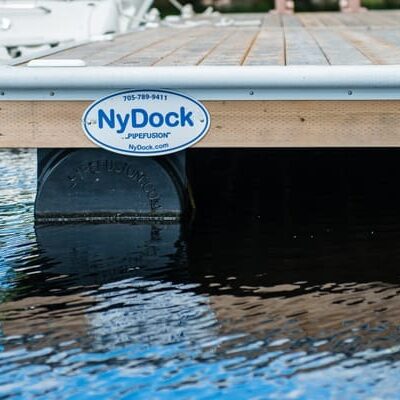
Key features of NyDock HDPE pontoons include:
Heavy-walled construction: Made from durable HDPE pipe designed for demanding applications.
Sealed flotation chambers: Fused end caps create an enclosed pontoon designed to prevent water from entering.
Foam-free construction: No EPS foam or other internal foam components.
Lifetime pontoon warranty: NyDock stands behind its pontoons with a lifetime warranty.
Multiple sizes: Available in 14", 18", 22", 24" and larger custom configurations.
Winter performance: Designed to remain in the water during winter, including freeze-in ice conditions.
Low maintenance: No routine foam replacement or steel float corrosion concerns.
HDPE pontoons are also suitable for more than traditional residential docks. They can be used for commercial floating platforms, marinas, dock boats, floating boathouses and DIY dock construction.
Foam Filled Dock Floats vs. HDPE Pontoons: Side-by-Side Comparison
Both foam filled dock floats and HDPE pontoons provide flotation for floating structures, but their internal construction is quite different.
The following comparison highlights some important considerations for homeowners.
| Feature | Foam Filled Dock Floats | NyDock HDPE Pontoons |
|---|---|---|
| Construction | Polyethylene shell with EPS foam core | Hollow, sealed HDPE chamber |
| Internal flotation | EPS foam | Enclosed air chamber |
| Foam content | Contains EPS foam | No internal foam |
| Exterior material | Typically polyethylene | Heavy-walled HDPE |
| Buoyancy | Provided by internal foam | Provided by sealed chamber |
| Maintenance | Depends on construction and condition | Virtually maintenance-free |
| Environmental considerations | Potential foam exposure if damaged | Foam-free construction |
| Winter performance | Depends on product and dock design | Designed to remain in ice over winter |
| Warranty | Varies by manufacturer | Lifetime pontoon warranty |
Durability and Long-Term Performance: Which Dock Floats Last Longer?
Your floating dock is exposed to changing water levels, sunlight, waves, impacts and seasonal weather conditions. Over time, these environmental factors can affect the performance and condition of your dock's flotation system.
When comparing foam filled dock floats and HDPE pontoons, it's important to look beyond the initial purchase price and consider how the materials are designed to perform over the long term.
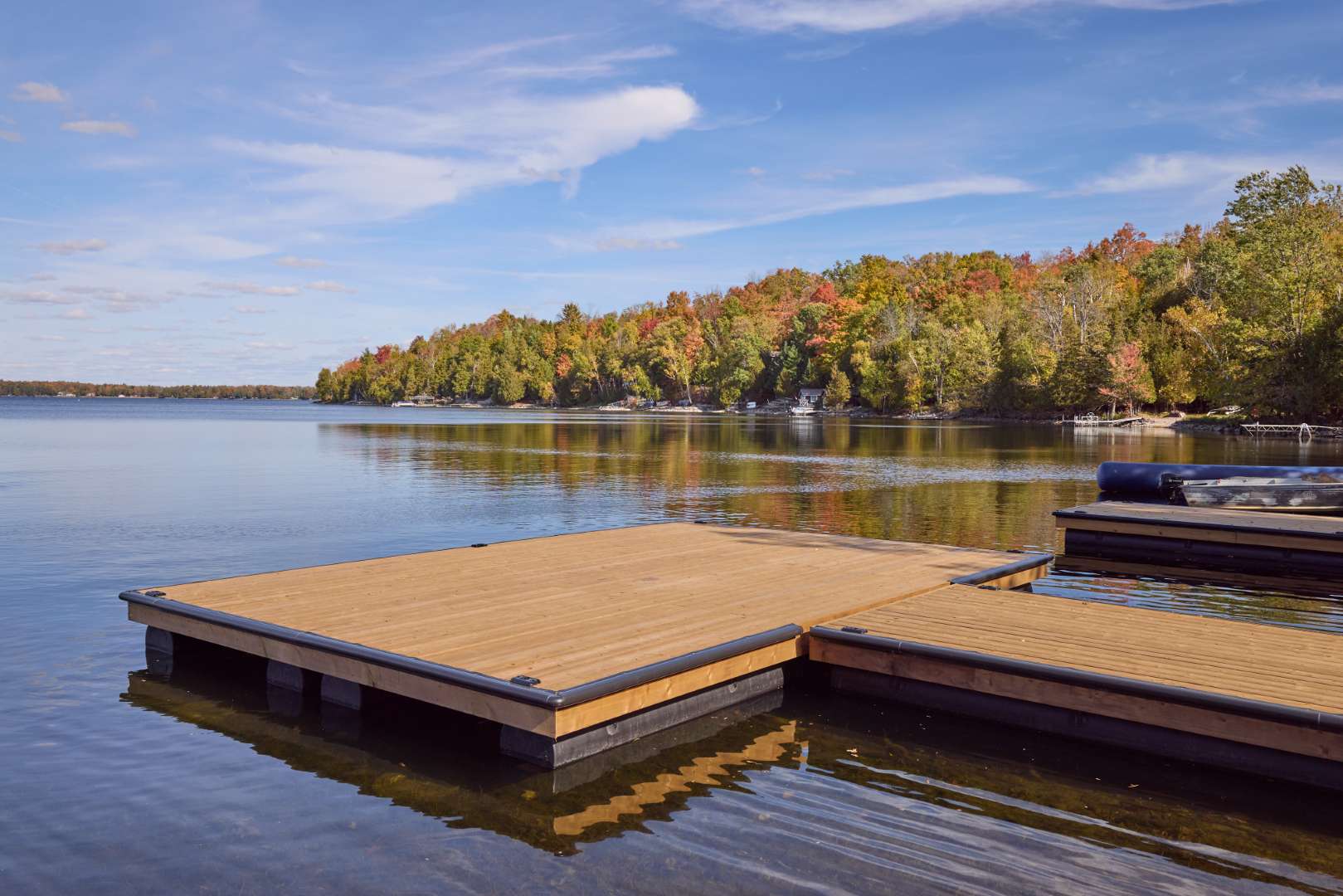
Understanding Material Durability
Foam filled dock floats typically feature a polyethylene exterior that protects the internal foam core. The condition of this outer shell is important because damage can expose the foam underneath.
HDPE pontoons use a different construction approach. The thick-walled polyethylene material creates the flotation chamber itself, with fused end caps forming a sealed enclosure.
NyDock uses heavy-walled HDPE pipe originally developed for demanding industrial applications. This construction provides a durable pontoon designed to withstand the conditions associated with residential and commercial waterfront environments.
Maintenance Requirements
The amount of maintenance required will depend on the type of float, its construction and the conditions where your dock is installed.
Foam filled dock floats should be inspected regularly for cracks, punctures and damage to the exterior shell. Any exposed foam should be assessed to determine whether the float needs repair or replacement.
NyDock HDPE pontoons are designed to be virtually maintenance-free. Their polyethylene construction eliminates concerns associated with rusting steel floats, corrosion and deteriorating internal foam.
Long-Term Value
When evaluating dock flotation, consider more than the upfront cost. Installation, maintenance, repairs and replacement can all contribute to the overall cost of owning a floating dock.
NyDock HDPE pontoons are backed by a lifetime pontoon warranty, providing homeowners with additional confidence in their investment.
For cottage owners and homeowners planning to keep their docks for many years, choosing a durable flotation system can help reduce ongoing maintenance concerns.
Environmental Considerations: Foam Filled Floats vs. Foam-Free Pontoons
The materials used in your dock's flotation system can also have an impact on the surrounding waterfront environment.
Many foam filled dock floats use expanded polystyrene (EPS), commonly known as Styrofoam, as their internal flotation material. While the outer shell helps protect the foam, damage or deterioration can expose it to the surrounding environment.
When EPS foam becomes exposed, small pieces can break away and potentially enter the water. This is one reason why maintaining the protective exterior of foam-filled floats is important.
NyDock HDPE pontoons take a foam-free approach to flotation.
Because the pontoons use a sealed, hollow HDPE chamber rather than an internal foam core, there is no EPS foam inside that can become exposed if the pontoon is damaged.
HDPE is also a recyclable thermoplastic, making it a material that can be recovered and processed for reuse.
For homeowners who want to minimize the use of foam materials in their dock construction, HDPE pontoons offer an alternative worth considering.
Are HDPE Pontoons Suitable for Canadian Winters?
For many Canadian cottage owners, winter conditions are an important consideration when choosing a floating dock.
Traditional dock systems may need to be removed from the water before winter to protect them from ice movement, freezing temperatures and changing water conditions. Depending on the dock design and waterfront location, seasonal removal can require additional time, equipment and storage space.
However, not all floating docks need to be removed before winter.
NyDock HDPE pontoons feature freeze-in ice technology, allowing the pontoons to remain in the water during winter, even when the surrounding water freezes.

The durable HDPE construction is designed to withstand freeze-in ice conditions, eliminating the need to remove the pontoons each fall.
Before winter, the dock's ramp and shore tie must be disconnected to allow the floating dock to move independently with changing water and ice conditions.
This can be a convenient option for cottage owners who want to avoid the annual process of removing and storing their dock floats.
As with any floating dock, local ice conditions, water movement and the overall dock configuration should be considered when determining whether a dock can safely remain in the water over winter.
What Should You Consider When Choosing Floating Dock Floats?
The right flotation system depends on your waterfront, dock design and how you plan to use your dock. Before purchasing new dock floats or building a floating dock, consider the following factors.
1. Dock Size and Weight Capacity
The size and weight of your floating dock will determine how much flotation it needs.
Consider the weight of the dock frame, decking, accessories, boats and the people who will be using it. Your flotation system should provide enough buoyancy to support the total anticipated load while maintaining the desired freeboard.
2. Water Conditions
Not all waterfront properties have the same conditions.
Consider water depth, fluctuating water levels, wave activity, currents and exposure to wind. These factors can influence the type and size of flotation required.
3. Freeboard Height
Freeboard refers to the distance between the water's surface and the top of your dock.
The right freeboard height depends on your intended use, watercraft, accessibility requirements and overall dock design.
NyDock offers different pontoon diameters and configurations to accommodate different flotation requirements and freeboard heights.
4. Winter Conditions
If you own a waterfront property in an area with freezing temperatures, consider how your dock will be managed during winter.
Will you remove the dock every fall, or would you prefer a system designed to remain in the water?
NyDock's freeze-in ice technology provides an alternative for homeowners looking to leave their floating docks with HDPE pontoons in the water throughout winter.
5. Long-Term Maintenance and Warranty
Consider the materials used in the flotation system, the maintenance required and the manufacturer's warranty.
A dock is a long-term investment, so choosing a flotation system with durable construction and reliable warranty coverage can provide additional peace of mind.
Why Choose NyDock HDPE Pontoons for Your Floating Dock?
For homeowners looking for an alternative to foam filled dock floats, NyDock HDPE pontoons offer a durable, low-maintenance flotation solution.
Designed and manufactured in Canada, NyDock pontoons are constructed from heavy-walled HDPE pipe used in demanding industrial applications.
Unlike traditional foam-filled floats, NyDock pontoons use a sealed, hollow construction with no internal foam.
Here are some of the key advantages of choosing NyDock HDPE pontoons:
Lifetime pontoon warranty: NyDock stands behind its pontoons with a lifetime warranty.
Heavy-walled HDPE construction: Durable polyethylene material designed for demanding waterfront environments.
Foam-free flotation: No EPS foam or other internal foam components.
Freeze-in ice technology: Designed to remain in the water throughout winter.
Virtually maintenance-free: No rusting, rotting or foam deterioration concerns.
Multiple pontoon sizes: Options available for residential docks, commercial applications and specialty floating structures.
Custom configurations: Standard and tapered pontoon ends, mounting brackets and custom lengths to accommodate different projects.
Whether you're replacing existing dock floats, building a new floating dock or developing a larger waterfront project, NyDock can help you determine the right pontoon configuration for your application.
Explore the full range of NyDock HDPE pontoons to learn more about available sizes, features and configurations.